 Türkçe
 English
 Arabic
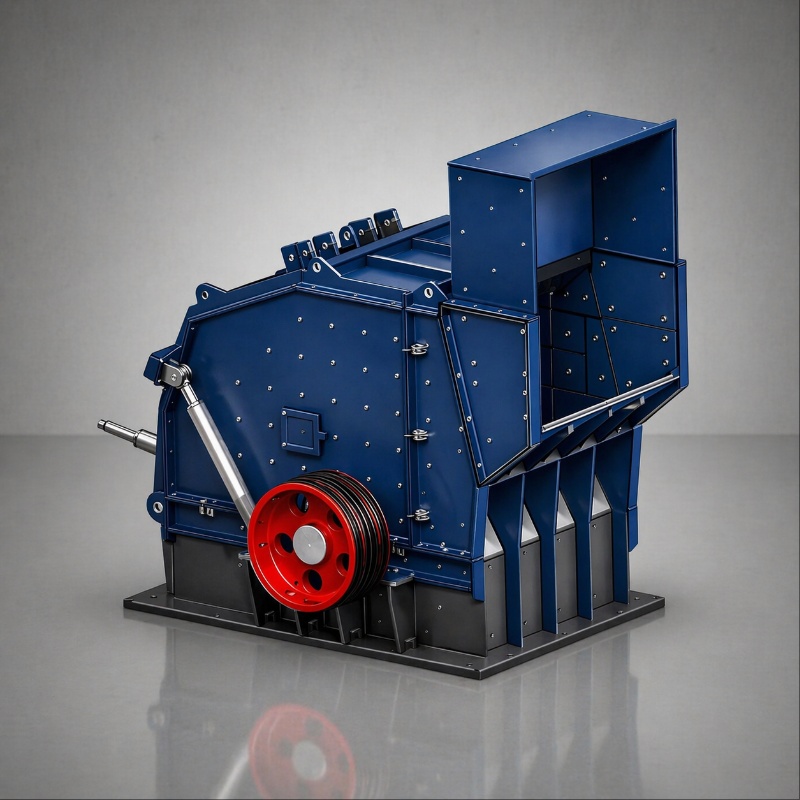
Secondary Impact Crushers
Secondary impact crushers are crushing equipment that operate with high-speed rotors and impact plates in order to reduce the material obtained after primary crushing to smaller and more homogeneous sizes. Material is fed into the crusher from the upper feed opening and is subjected to impact force at high speed by means of hammers mounted on the rotor. Through this impact, the material strikes the adjustable impact plates located in the crushing chamber and fractures, being gradually reduced to the desired size through the multiple impact principle. Thanks to the adjustable discharge opening, the final product size is controlled with precision, while homogeneity and efficiency are maintained in a sustainable manner during the production process.
Technical Specifications
| Structural Features | |
|---|---|
| Operating System | Impact crushing principle |
| Rotor Structure | High-speed rotor + blow bar |
| Crushing Chamber | Adjustable impact plates (apron) |
| Adjustment Mechanism | Hydraulic gap adjustment |
| Application Type | Secondary crushing applications |
| Performance | |
|---|---|
| Product Shape | Cubic and homogeneous product |
| Crushing Ratio | High reduction ratio |
| Material Compatibility | Low-medium abrasive materials |
| Energy Efficiency | Optimized rotor structure |
| Maintenance | Easy part replacement and access |
Applications
Used in reducing material size in the secondary stage after primary crushing
Preferred in cubic and quality aggregate production
Provides highly efficient solution in secondary crushing stage
Used for secondary crushing operations on suitable materials