 Türkçe
 English
 Arabic
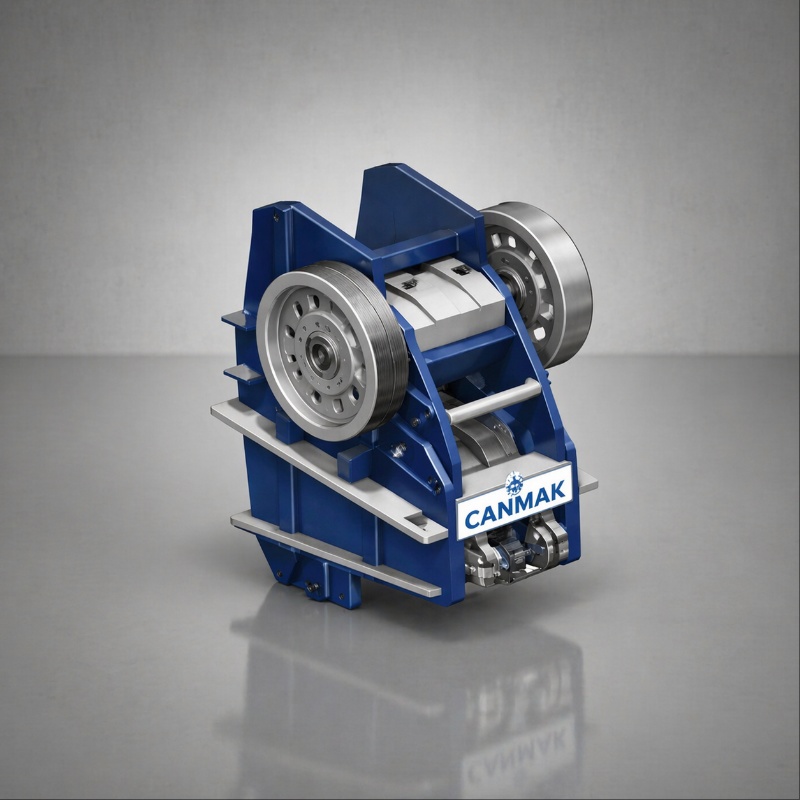
Jaw Crushers
Jaw crushers are basic crushing equipment that operate on the principle of crushing material by pressure between a fixed jaw plate and a movable jaw plate driven by an eccentric shaft. Material is fed between the two jaws through the feed opening and is compressed and fractured as the movable jaw moves back and forth due to the rotation of the eccentric shaft. The crushed material is discharged in a controlled manner from the adjustable discharge opening at the bottom. The discharge spacing is optimized through hydraulic systems to obtain the desired product size, and in this way process efficiency and product quality are managed sustainably.
Technical Specifications
| Structural Features | |
|---|---|
| Jaw Plates | High-quality manganese steel |
| Body | Heavy duty — resistant to high impact loads |
| Discharge Opening | Hydraulically adjustable |
| Design | Modular — easy part replacement |
| Lubrication | Automatic lubrication system |
| Performance | |
|---|---|
| Wear Resistance | High — manganese steel jaw plates |
| Maintenance Time | Minimum — modular design |
| Product Size Control | Precise — hydraulic adjustment |
| Operating Continuity | Uninterrupted — automatic lubrication |
| Energy Efficiency | Optimized jaw angle |
Applications
Quarries and Mining Sites
Crushing large rock blocks in the primary crushing stage
Crushing large rock blocks in the primary crushing stage
Hard Material Processing
Crushing granite, basalt, limestone, dolomite
Crushing granite, basalt, limestone, dolomite
Recycling
Recycling of construction and demolition waste
Recycling of construction and demolition waste
Aggregate Production
Aggregate preparation for road construction and concrete production
Aggregate preparation for road construction and concrete production